IAVA Members Weigh In on the Take Care of America’s Veterans Act
Press
Check out the new IAVA store! SHOP NOW

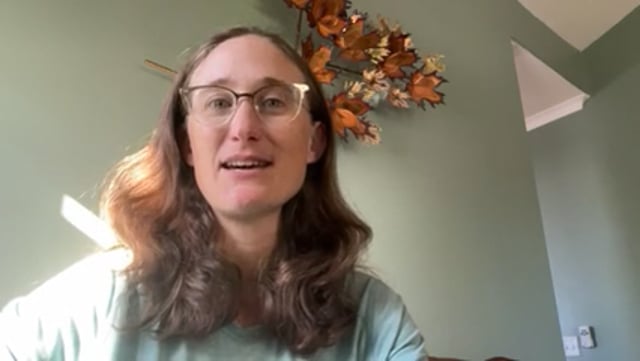
Name: Melissa Walther
Hometown: Colorado Springs
Branch: Army Reserve
Years Served: 1999-2008
Rank: Spc. (E-4)
Military Occupation: 46Q Public Affairs Specialist
X (Twitter) Handle: @MWalther16181
Tell us a little about you outside of the military: For the last 11 years I have worked as a civilian for the Air Force, most recently at the Air Force Academy. Recently, I transferred to the EPA, where I continue to advocate for environmental justice in under served communities, often with high veteran populations. I am happily married and have a dog who loves to “help” in the garden and keep me company on long hikes.
What do you hope to gain from the fellowship? I hope to gain a greater connection to my fellow veterans and more experience in leading advocacy. Finding effective ways to use my voice to speak up for those who might not be able to is important to me.
What does advocacy mean to you? Advocacy means using my voice to speak for those who may not be able to speak for themselves in order to effect positive, meaningful change. Too often people say “well, that’s just the way it is, what can I do about it as just one person?” One voice alone may not be heard, but many voices, coming together can become a shout that cannot be ignored. I have seen the impacts of persistent advocacy in my own personal life, both positive and negative, and I want to be a voice that helps lift my fellow veterans.
How did your military experience shape you to be the person you are today? I joined when I was 17 and lucked into a career field that suited me more than I could imagine. It gave me a lifelong career I love and friends I still regularly talk to today. It opened my eyes to a world I might not have otherwise seen. As a public affairs specialist in the Army, it was my job to tell the story of the Army, from generals to privates, and it showed me that regardless of rank, everyone has a story to tell. I love telling those stories and meeting people who served. No matter how different and diverse our backgrounds, we all have a shared experience of service. Now, when I meet people, I listen to their stories, and celebrate the differences while finding the commonalities.
Which one of IAVA’s policy priorities do you believe is the most pressing? Why? I firmly believe the most pressing issue we face is protecting our democracy. Increasingly, it feels as though small groups on both sides are making sweeping decisions for people, regardless of what those people actually want or need. We are seeing the erosion of constitutional values by the very people who speak loudest about what the founding fathers would want, while at the same time, not adapting to the radially different realities of the modern world. Rather than creating a democracy, where the voice of many rules, it’s the voice of the privileged few, and I have seen the rights I and others have fought so hard to protect eroded.
Which one of IAVA’s policy priorities do you have the strongest personal connection to? Why? I feel the strongest personal connection to the issue of reproductive care access. The issue disproportionately impacts women, and yet frequently decisions about our care are made by men who have little to no knowledge of basic biology, let alone the issues unique to women. There are so many reasons outside of life-threatening medical care that a woman may decide an abortion is right for her, yet these are not taken into consideration. Military members do not have the luxury of just moving to a state that will honor those decisions, and by serving our country, we are treated as less-than in some states. It is frequently not possible for women in service to continue their careers after having a child, which harms overall readiness, and should never be an issue. Even a healthy, viable pregnancy can be dangerous, and we now see doctors afraid to render even life-saving care due to draconian laws, which differ from state to state. Maternal mortality within the United States ranks 122, and is below places like Lebanon, Gaza, the West Bank and Belarus. Our servicewomen risk their health and lives regularly for this country, and should be given all the options of any woman in any state, not just the state they happen to serve in, and should be allowed to make decisions based on what is best for their own lives.
We can’t do this alone, we need your support to ensure that VA provides service to veterans who gave everything for this country.


